Saturday, 1 October 2022

RRG October 2022

A reccie of Chobham Common by CHR/KDT found a very quiet site (a few Stonechats were the only highlight) so we decided to wait with the hope that Redpolls are on their way. EP was recovering from a broken leg, had returned to Bedfont, when… she found out she needed a heart-value operation. That curtailed ringing activities for the rest of October, but the op was successful and EP, is once again, on the mend.

*** Congratulations to EW for her A permit upgrade. EW put the effort in this year, processing around 1,000 birds, by helping out neigbour Hughenden RG to run two CESs, still getting our Wraysbury CES done and ringing with TA at his finch site ***


** Welcome to BJD - a trainee from Sandwich Bay BO who will be training with CHR **


Ageing Cetti’s Warbler

There is a reference in Demongin suggesting that some young Cetti’s Warblers can be aged after their post-juv moult. Some individuals retain one or more undertail coverts: these are longer than the adult-style feathers and their tips are slightly less bright. To my eye, they can be a little more worn too.

A Jubilee River, Taplow Cetti’s Warbler, 9th October 2022 (CHR)


Bedfont Lakes (EP)

Managed one session at the main site with AAB and my friend Noel. Was very busy with tits and chiffs. A commotion between a Sparrowhawk and parakeets ended up with 3 adult male rinpa being caught. Quite a rarity these days at Bedfont just because of where we place our nets.


Wraysbury – WGP (CHR)

We ran two sessions in October (2nd & 8th) but then poor weather got the better of us. Blackcaps trickled through the site (8 & 5) as Redwing arrived (1 & 6) - will the crossover of these species broaden as our summers get milder?


Chiffchaffs managed a total of 17 but it was the pipit triangle that produced our most populous species (22 &10 Meadow Pipits).


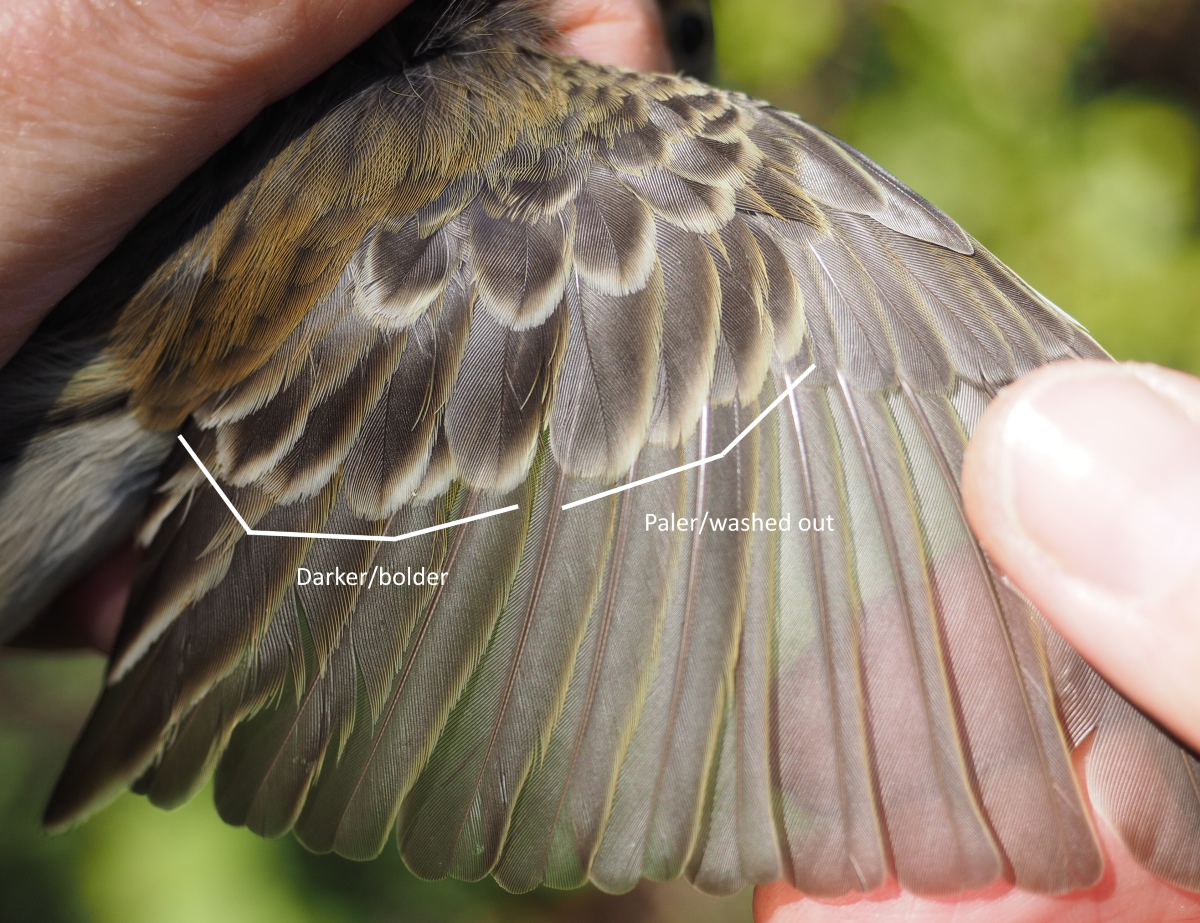
One of those 32 Meadow Pipits, ARX2039, was curious. The inner OGCs were more deeply defined than the outer OGCs, though without the short ‘tooth’ of an adult feather.


ARX2039 Meadow Pipit with two variations of old greater covert

Recoveries

Ringed by RRG: boxed in green.


LDT347 Chiffchaff Phylloscopus collybita   Scheme:GBT

Duration: 18d Distance: 10 km Direction: 305° (NW)

Ringer: Runnymede Ringing Group, 9073; Ringing date: 15-Sep-2022 11:50:00

Age: 3J Wraysbury Gravel Pits, Windsor and Maidenhead, UK County code: GBWAM, Grid ref: TQ0173 Coords: 51.450000, -0.533000; Wing: 59.0mm; Weight 8.0g

Finder: Hughenden Rg, 9106; Finding date: 03-Oct-2022 (0) 11:00:00

Age: 3 Jubilee River, Slough, UK

County code: GBSLO, Grid ref: SU9479 Coords: 51.500000, -0.633000

Wing: 60.0 mm.; Weight: 7.2 g., Time: 11:00hrs

Subsequent Capture by Ringer, Intentionally Taken


AHE4084 Blackcap Sylvia atricapilla   Scheme:GBT

Duration: 2yr 26d Distance: 41 km Direction: 344° (NNW)

Ringer: Runnymede Ringing Group, 9073; Ringing date: 06-Sep-2020 12:30:00

Age: 3, Sex: M Sex meth: P Wraysbury Gravel Pits, Windsor and Maidenhead, UK County code: GBWAM, Grid ref: TQ0173 Coords: 51.450000, -0.533000; Wing: 75.0mm

Finder: Tring Ringing Group, 9171; Finding date: 02-Oct-2022 (0) 07:00:00

Age: 4 Sex meth: P, Sex: M Wilstone Reservoir, near Tring, Hertfordshire, UK (WIL)

County code: GBHES, Grid ref: SP9012 Coords: 51.783000, -0.683000

Wing: 78.0 mm.; Weight: 16.5 g., Time: 07:00hrs

Subsequent Capture by Ringer, Intentionally Taken


AFV8250 Cetti's Warbler Cettia cetti   Scheme:GBT

Duration: 11m 29d Distance: 88 km Direction: 39° (NE)

Ringer: Titchfield Haven Ringing Group, 9216; Ringing date: 09-Oct-2021 07:00:00

Age: 3, Sex: F Titchfield Haven National Nature Reserve, Hampshire, UK (TFH) County code: GBHAM, Grid ref: SU5302 Coords: 50.800000, -1.233000; Wing: 57.0mm; Weight 10.7g

Finder: Runnymede Ringing Group, 9073; Finding date: 08-Oct-2022 08:50:00

Age: 2 Sex meth: S, Sex: F Bedfont Lakes, East Bedfont, Greater London, UK (BFT)

County code: GBGLO, Grid ref: TQ0772 Coords: 51.433000, -0.450000

Wing: 56.0 mm.; Weight: 11.5 g., Time: 08:50hrs

Subsequent Capture by Ringer, Intentionally Taken


EY67908 Black-headed Gull Chroicocephalus ridibundus   Scheme:GBT

Duration: 9yr 3m 15d Distance: 355 km Direction: 247° (WSW)

Ringer: Runnymede Ringing Group, 9073; Ringing date: 07-Jul-2013 11:00:00

Age: 1 P.ringed: 1, P.alive: 0 Bedfont Lakes, East Bedfont, Greater London, UK (BFT) County code: GBGLO, Grid ref: TQ0772 Coords: 51.433000, -0.450000

Finder: West Cornwall Ringing Group, 9210; Finding date: 22-Oct-2022 (0) 17:00:00

Age: 0 Swanpool, Falmouth, Cornwall, UK (FAL)

County code: GBCOR, Grid ref: SW8031 Coords: 50.133000, -5.067000

Sight record by a ringer, Metal Ring Read In Field


Ringing this September 2022

No ringing at group sites took place in the last half of the month so totals were historically low. We had a Devon-ringed Blackcap at Wraysbury, a Dunnock ringed in Iver and died in Iver and a young Chiff from Wraybury in July, turning up on Jubilee River this month - where will it choose to breed next year?

We had run three sessions by mid-month, when I took a week off up north. On return the 25/26 looked too windy for the site and no further visits were made.

The first two sessions each returned 150+ birds and the third session’s 100+ reflected a reduction in team/nets (CHR/EW). Blackcap (193), Chiffchaff (103) flavoured catches throughout but it was good to get Meadow Pipits from 10th and 15th (45) and Willow Warbler (22) were the fourth commonest species.

TA took a smart 5M Sparrowhawk out at the start of a round on 10th. This is the only hawk ringed this year by the group and follows a trend of one bird per annum. This wasn’t always the case and we’ve had more years of 5+ hawks this century than not!


5M Sparrowhawk - bird survey, Wraysbury September 2022


Sparrowhawk totals C21st

Year

Total


Year

Total

2022

1


2010

12

2021

1


2009

10

2020

1


2008

6

2019

3


2007

6

2018

6


2006

8

2017

2


2005

7

2016

4


2004

8

2015

4


2003

11

2014

13


2002

6

2013

7


2001

9

2012

3


2000

4

2011

7


Monday, 5 September 2022

Another CES year completed - August 2022

It’s always satisfying when you get the final CES “in the bag”. After last year’s windier trends, this year was dominated by drought. Check out the Wraysbury write-up to see how the site performed.

The BTO has published new guidance on bird welfare with respect to disease transmissionThis new guidance is intended to help reduce the spread of avian influenza.

Bedfont Lakes (EP)

Treecreeper in-hand ahead of release
After a bit of a kick up the backside by KRP the Bedfont crew got out for the first time since
went splat and broke my leg back in June. All the team turned out and my friend came along to help me carry stuff. All 9 CES nets were put up, although we didn't do CES this year, so it was good to cover the area. 

The catch was slow to start with but picked up throughout the morning: 31 new birds and 4 retraps. As expected, juvenile Reed Warblers were dominant but a juvenile Sedge Warbler was caught, we only seem to get them on migration these days, none have knowingly bred at Bedfont for a few years. A new juvenile Cetti’s Warbler was caught and an adult retrapped. The biggest surprise was a juvenile Treecreeper (opposite).

Migrant Hawkers were the main dragonflies flying; one was caught in a net and a few Willow Emerald damselflies were also found - a species on the rise in England over the past few years.

Wraysbury SSSI (CHR)

We completed the CES with sessions 10, 11 and 12 in August (6th, 18th & 28th  respectively). Starting a smaller CES in 2021 paid off as four sessions were run by a two-person team.

CES 2022 started below 2021 figures, bettered CES 5 and then got worse at mid-season sessions (CES6-10) as the site dried out (as much of South England did). A downpour on the day before CES 11 really demonstrated what the site needed and numbers tripled from CES 10. Autumn migration had begun for CES 12 where numbers doubled (158 birds were processed when extra nets are included).

If we look at 3J J birds - birds most-likely fledged on-site - we can see that Blackcap (22 versus 24 in 2021) held their own, despite the drought and Chiffchaffs really prospered (32 versus 17 in 2021).

For all ages the catches for 2021/2022 were:

Garden Warbler 29/16
Lesser Whitethroat 7/5
Reed Warbler 6/8
Sedge Warbler 4/0
Whitethroat 48/20
Willow Warbler 4/11*

* migration is earlier in 2022 and August recorded 13 Willow Warblers passing through.

The 18th saw a species we last recorded at Wraysbury on July 2014 and not regularly since 2010: an adult Grasshopper Warbler (below), with heavily worn feathers, heading through the site.


An adult Garden Warbler was also present. This is a species that undertakes a long winter moult and is renowned for its good feather condition. Unusually, this individual was relatively worn.

Note the missing and wear on the upper-tail coverts, tail thinness and tip wear, and worn primaries and tertials. Tertials are heavily worn and I’ve taken to looking at tertials as an aging guide on many more species in recent years.

missing or worn upper-tail coverts

worn (for an adult Garden Warbler) tail feathers

worn (for an adult Garden Warbler) primaries

DemOn Q/A: How can I find same-day retraps?

This is a useful task to perform after entering any sizeable number of records which include
some retraps:
  1. Perform a search for the day and site of interest.
  2. From the results click Crosstab results.
  3. Enter Ring No and Record Type (see below) and you’ll see your birds in a table
  4. Any row that totals more than 1 denotes a same-day retrap
  5. Go back to the search where you can delete the duplicate


Monday, 1 August 2022

Post-juvenile dispersal - July 2022

A change in tone for this month's blog as we write about subjects and use terminology familiar to bird-ringers.

An increase in 3J P birds marks the turning point of the season when young birds move off their natal sites and begin their post-juvenile moults.

The BTO has asked bird ringers to record more main wing moult scores: “record and submit a moult code for every bird and primary moult scores (e.g. 5555420000) for birds moulting their primaries, it will help improve the quality of the data if you don’t already.

This can produce information on the timing of breeding and a multitude of different analyses like the phenology figures on the online report pages.”

Wraysbury SSSI

We ran four sessions in July: on 3rd (CHR, ECP, EW, OMS, PMW), and CES 7 (CHR, PMW), CES 8 (CHR, ECP, EW, MEM, PMW, TA) and CES 9 (CHR, EW); deciding to hold off CES 10 to August.

The heat continued to dry the site out and this, on face value, must be having an impact. CES 9 was particularly miserable with only a dozen birds in 360’ of netting. Highlights included ECP’s first Magpie on 16th.

If we look at CES July as a whole then we see its missing numbers of Blackcap and Whitethroat, though Chiffchaffs have actually outpaced 2021 catches. We’re not seeing large tit flocks at  Wraysbury either.

Retraps of note

A Robin ringed in 9/2017 and a Garden Warbler ringed in 7/2017.

Bardsey (RSH)

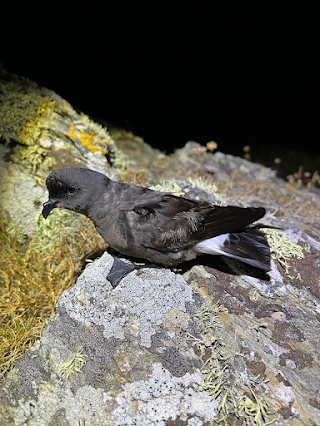
Just back from my annual week’s birding and ringing on Bardsey. Plenty of Storm Petrels (see
photo opposite) 
to ring at night - up to fifty caught in an evening - and lots of Manx
Shearwaters.

The population of shearwaters has at least trebled to over 20,000 pairs since I first went there in the sixties. They are easy to catch - you can walk around with a torch at night and pick them up! Not clear why the numbers have increased but they are long-lived birds - one is at least fifty years old and onto its third ring.

They are in the midst of a satellite tagging project to see how far they move on feeding trips which involves tagging them and checking the burrows in which they nest at night every evening till they return - the map shows one such track indicating some birds cover hundreds of miles over a week or so - whilst others stay close to home and come back every night. The young birds are literally just a ball of fluff and the observatory monitors a hundred burrows each year to get a sense of breeding success - weighing the birds each week - you simply sit them on the scales! They grow quickly to around 700g and then the parents stop feeding them and they fledge on a suitable dark night at about 550g with the wings fully developed. (Further reading Editor)


Warbler movement had just started with a 
number of bright yellow youngsters about (see
photo 
opposite). About half were still completing post-juvenile moult, so probably only about 6  weeks old.


News from The Parks

In June, we did four goose/swan catches at different inner London Royal Parks (Hyde Park, Kensington Gardens, St. James’s Park and The Regent’s Park). All the birds were captured by hand, feeding and grabbing (proper round-ups not being allowed).

The catches were timed perfectly to coincide with the rail strikes (!), meaning that some of the
people who had planned to come couldn’t make it. However, over the four mornings, a total of 23 adult and 2 young Greylags were captured and 8 Mute Swans.

All the Greylags are now sporting smart, white colour rings with a 4 alphanumeric code starting U3 and the swans have orange rings starting with the number 4 followed by 3 letters.
More catches were planned for July, though this time the available dates chosen coincided with the hottest UK days on record, so catches had to be cancelled, sadly.

The moult counts for the two months for all four parks combined were 523 (June) and 664 (July), so plenty more birds to ring.

To date, fifty-seven Greylags have been colour-ringed in the Central London Royal Parks since September 2021 and the project is already producing results with the birds being resighted in Richmond, Kew Gardens, Dagenham, Finsbury Park (2 birds), Orpington, and Southgate, as well as movements between the different parks. So, keep an eye
out for them!

Demon Q/A: Recording 3J birds during post-juvenile moult

A couple of pointers for coding moult beyond 3J P.
3J F is used to record partial replacement of primary flight feathers. Useful for Goldfinch
where a proportion of young birds replace some primaries.

3J T is used when a bird is moulting tertials and/or tail feathers. Some 3Js replace their
central-tail feathers during their post-juvenile moult. Chiffchaff is a species where young
birds commonly replace their central feathers.

Demon Q/A: do you know reportworthy_flag?

Flag Report note Comment & thoughts
  • C First for country
  • F First for county
  • G Longevity record (local level)
  • L Longevity record (national level)
  • M Significant movement of species
  • O Other
  • Q Questionable recovery record*
Ringers will need to define significant movement and might use Other to mark photographic records.
* A Q recovery example: a Barn Owl ringed in Oxfordshire was found dead, in Helmland
Province, Afghanistan at Camp Bastion, 5,700km away. The BTO suggests the bird was
inadvertently transported, in some way, by the army.

Monday, 11 July 2022

Mid-way through our Constant Effort Sites scheme - June 2022

Across our country, bird ringers are working together by generating data for the BTO's Constant Effort Sites scheme. This programme monitors the breeding success, decade-on-decade, of 24 species.

Of these, two are on the 'Red list' of the Birds of Conservation Concern (BOCC): Song Thrush and Willow Tit; and four are Amber-listed: Dunnock, Willow Warbler, Bullfinch and Reed Bunting. 

The other species are Wren, Robin, Blackbird, Cetti's Warbler, Sedge Warbler, Reed Warbler, Whitethroat, Lesser Whitethroat, Garden Warbler, Blackcap, Chiffchaff, Long-tailed Tit, Blue Tit, Great Tit, Treecreeper, Chaffinch, Greenfinch and Goldfinch.

Twelve surveys take place each year to make up a complete data survey. This June, we completed the fifth and sixth surveys of the twelve.

The fifth session bucked the year’s catching trend and was significantly up on 2021 which helped this year pull back on last year’s numbers. One still left feeling we’re missing a third of the catch.

We did see some older birds this month: two Garden Warblers ringed by us in 2015. Garden Warblers migrate to Africa each winter and in these cases, that's seven-round trips since being ringed - mindblowing when you see how small these birds are (they weigh less than 20g).

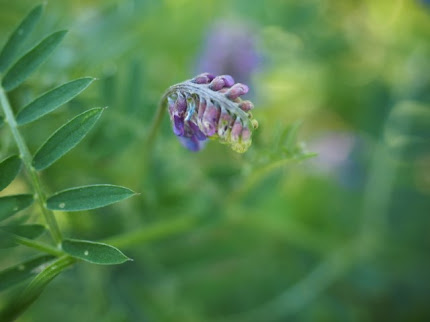
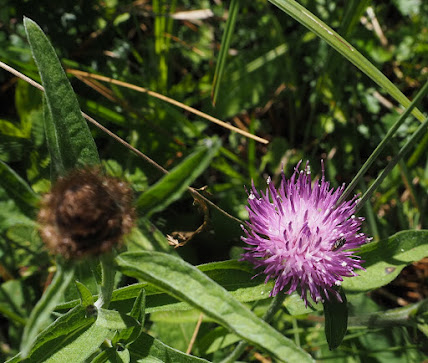
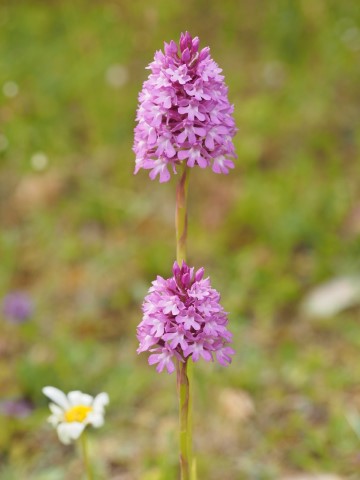
The site's flora was in full bloom...

Bird vetch
Bird vetch
Centaurea nigra
Centaurea nigra
2 Pyramidal orchids
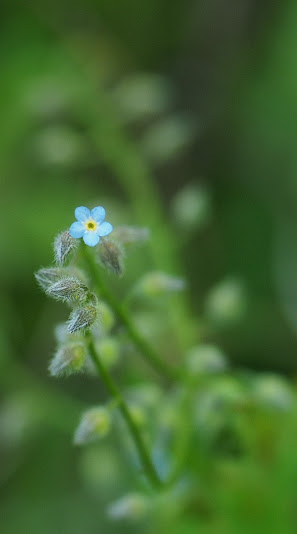
Myosotis nemorosa Wood Forget-me-not

Wednesday, 1 June 2022

Summer is here for our breeding birds - May 2022

Birds don't wait until our summer to breed and some of our species, like pigeons and cormorants, can start laying as early as January!

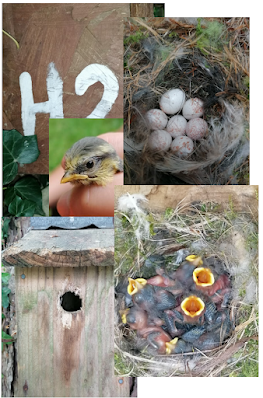
Our Blue Tits aren't as early as those species but do get a head start on returning migrants by laying from the end of April and fledging young as early as May. That gives us some busy sessions checking boxes and (digitally) filling out nest record cards to contribute to the national scheme.

We have a few boxes at a nature reserve, just outside Maidenhead. These boxes have had a good year, with all being occupied.

Blue Tit box-checking for the annual national survey

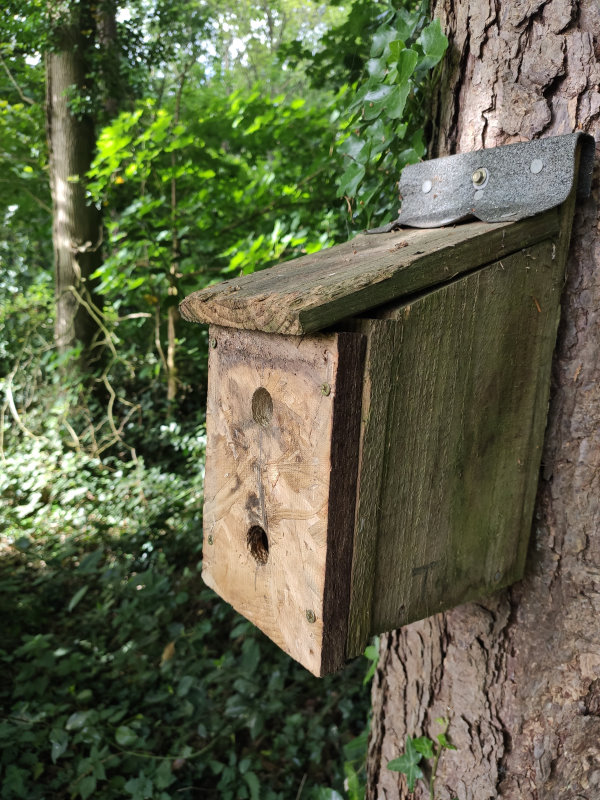
One of our boxes had the unwelcome attention of a Grey squirrel so we added protection to the front of the box to keep the chicks safe.

A second front was added to this box to stop squirrels chewing their way through to the nest

Sessions at Befont produced an interesting Reed Warbler which we'd ringed as an adult in 2014 making this bird at least eight years old and eight round-trips between Bedfont and Africa!


We ran three sessions at Wraysbury to continue our Constant Effort Site programme. Numbers were down compared with last year and we will have to await the national report to see how the site has faired compared with the broader picture.

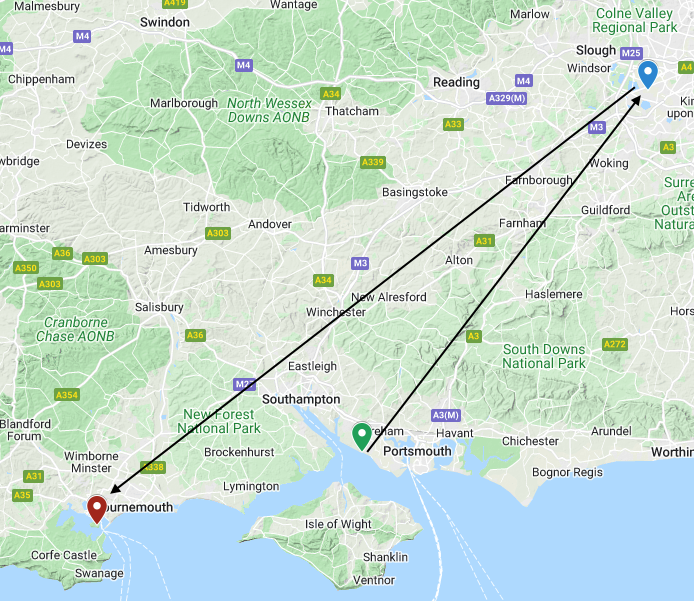
Bedfont had two other interesting recoveries: a Cetti's Warbler ringed in Titchfield Haven National Nature Reserve last October. And a Bedfont colour-ringed, in 2019, Common Tern chick was seen down in  Dorset this May.

Common Tern & Cetti’s Warbler Bedfont recoveries mapped

Wednesday, 4 May 2022

Migrants return - April 2022

This month the group returned to Wraysbury to prepare the site for the CES and catch the migrants as they returned to the country.

Top species were Blackcap (41 individuals), Chiffchaff (14) and Dunnock (11). By the last session (which was CES #1) we recorded the season’s first Garden Warbler (6) and 3 further Whitethroat (we’d captured our first on 15th). Regulars noted the absence of Willow Warbler this year - we’d recorded five last year and this April we didn’t even hear any song.


I took four of our trainees around the woodland boxes at Woolley Firs on 23rd. Last year I had reduced the number of boxes to be intune with the thinning of trees carried out by BBOWT. All remaining boxes were occupied and all but two had begun clutches.

I mentioned to the trainees that we had a couple of years of Great Tits nesting in a Tawny Owl box at Woolley. A great example of a bird’s natural instinct to build a nest even when the choice of site is far from ideal. In both years the clutch successfully fledged. We removed the box after seeing this two years running and put up a smaller box, just for the tits.

A Great Tit nest at the bottom of an owl box