Tuesday, 1 August 2023

July - Redwing surprises us all

July is the month for peak fledglings. Bedfont had its Reed Warbler young and the Black-headed Gull pulli not ringed in June. Families of Long-tailed, Blue and Great Tits moved into the site and young Blackcap, Cetti's Warbler, Garden Warbler, Robin, Treecreeper and Wren were also ringed.

Wraysbury also ringed young warblers, its habitat attracting good numbers of Blackcap, Chiffchaff and Whitethroat. Other young ringed included Cetti's Warbler, Garden Warbler, Goldcrest, Reed Warbler, Robin and Wren.

The team at Wraysbury were most surprised to catch a winter migrant - a Redwing of all things. Typically these birds overwinter with us returning to their northern breeding grounds before Spring. But here we had an adult bird, in good condition, on 9th July. 

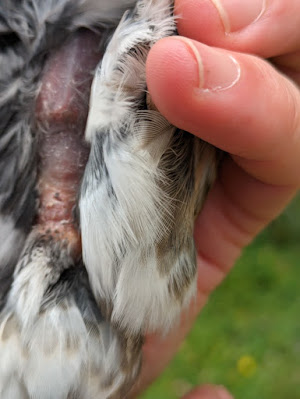
 The bird was moulting its primary feathers, had some bareness on its lower belly. Wing coverts suggested it might be aged five though its tertials had no hint of pale wedges, perhaps having worned down. The bird looked and behaved fit and healthy though its feathers were, in general, in a worn condition.
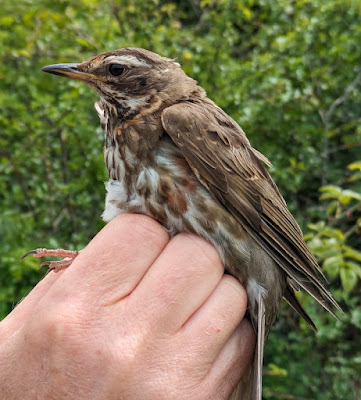
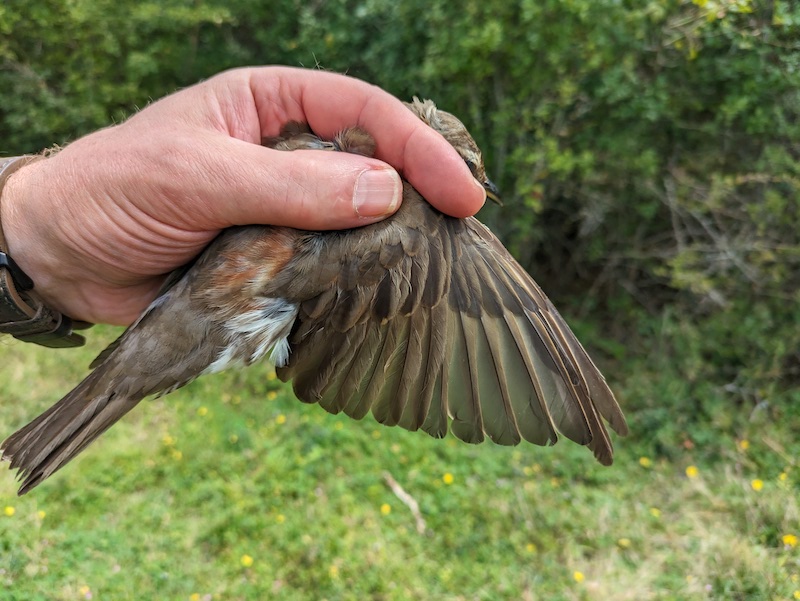
Redwing, England, July 2023

We can age this bird code 5 with its 5 old greater coverts and one old (outer) primary coverty (two on the left wing). Its 1st-5th primary feathers are new, its 6th growing and its 7-10th are old, still to be replaced. This is not a typical moult pattern; one wouldn't expect just the 6th to be growing, but then this bird is far from typical.


From the fieldsheet: Sexing Method E cloacal examination: shaped like a female's and pointed tailwards and the area was bare. There was no "dip" but there wasn't a Brood Patch either.

This wasn't Wraysbury first summering Redwing - there was another on 26 June 2004. That individual had one short wing perhaps explaining why it had stayed in the UK. This year's bird had wings of the same length (within 1mm).

Saturday, 1 July 2023

June - the busy breeder month

Bedfont netting topped and tailed the month with sessions on 10th and 24th. Reed Warblers had built-up from May and it was great to see a bird ringed in 2014 return again. Colour was delivered by Jay and Kingfisher. A mid-month visit saw fifteen Black-headed Gull pulli ringed.

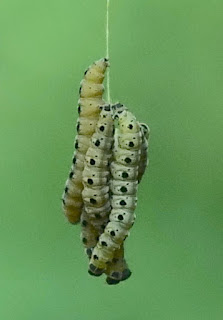
Ermine Caterpillars
Wraysbury completed all CES sessions for June plus one additional visit on the Westside, each navigating the unsettled weather masses as they crossed the country. Bullfinch and Greenfinch were added to the species list and warbler numbers continued to build.

No bird photographs this month but a clump of Ermine caterpillars hung by the path as we left the site (if you have a different id, do add a comment).

Minet's mid-month session saw Chiffchaff and Whitethroat along with resident species such as Robin, Song Thrush and Wren.

Thursday, 1 June 2023

May kicks off the breeding season for many of our warblers

Ringing took place at three group sites in May, recording the breeding season in full swing.

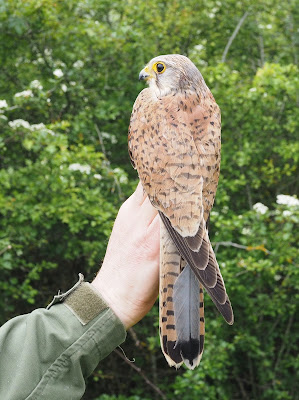
5M Kestrel
Wraysbury ran two CES sessions this month recording Blackcap, Cetti's Warbler, Chiffchaff, Lesser Whitethroat, Reed Warbler and Whitethroat from the warbler family. A couple of Reed Bunting stand out as this species has become less common at the site and a Kestrel and Green Woodpecker provided new training experiences for our trainees to learn ageing, sexing and handling.

The month's oldest ring was on a Wraysbury Whitethroat from July 2018 and it was good to see Lesser Whitethroat  and Song Thrush from 2019 again.

The Kestrel was aged 5 and a single replaced blue/grey tail feather enabled sexing as a male. Note that bluish head feathers would have been a strong criterion on their own.

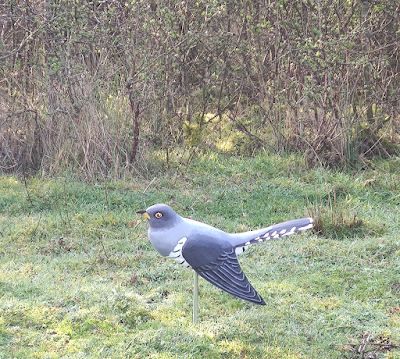
Away from the CES we tried a 3D-printed Cuckoo decoy but no birds were yet present.

Towards the end of May, Minet recorded Blackcap, Chiffchaff and Whitethroat along with regular residents. 

Bedfont also added a session on 29th catching returning Reed Warblers (2021 being the oldest ring).

The Blue and Great Tits had a good start at Woolley Firs and clutch size was typical for the site. For nest-recording, four visits took place giving a good picture of breeding at the site.

Tuesday, 9 May 2023

April sees the return! (2023)

Numbers increased at Minet compared with March. A Willow Warbler, three Blackcap and five Chiffchaff marked the start of migration and Green Woodpecker added further variety.


Visits to both sites at Bedfont produced more Blackcap and Chiffchaff as well as a Reed Warbler.


We opened Wraysbury for the year and also recorded Blackcap, Chiffchaff, Reed Warbler,, and Willow Warbler and added Garden Warbler and Whitethroat to the list of warblers.


A 3D model of a Cuckoo
Cuckoos haven't returned to Berkshire yet, so our decoy will have to be patient 


Saturday, 1 April 2023

March is a prelude to spring (2023)

In March many of our wintering birds have departed to their breeding grounds, while our own birds are still to return from their own wintering grounds.

Our ringing month started on 3rd at Minet, Southall. It produced a Great Spotted Woodpecker and Greenfinch amongst the tits, Dunnock and Blackbirds.

Mid-month we tried Bedfont picking up another Great Spotted along with Jay, Chiffchaff as well as more tits and Dunnock.

We surveyed Woolley Firs fields twice and its woodland once. The finch and bunting flocks had fallen in number as the year progressed and among the catch, only a single Yellowhammer graced the fieldsheet. We ringed four Nuthatch in the woodland.

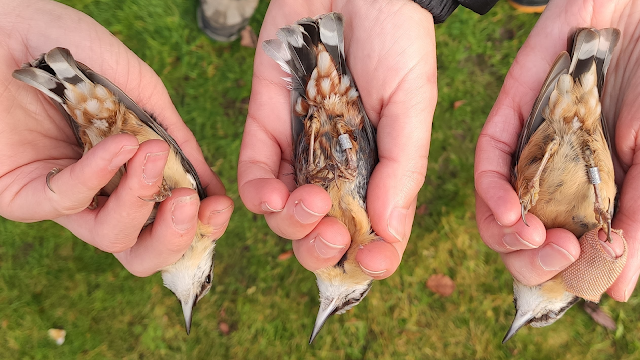
3 hands holding 3 Nuthatches
Three Nuthatches (adult male: middle bird; others: young females)


Thursday, 2 March 2023

Windy February is Mighty Frustrating for Bird Ringing (2023)

Woolley Firs

Despite running three sessions at Woolley Firs this month and getting out to Minet the high winds prevented ringing sessions in the second half of the month. February is one of the UK's windiest months but it's still frustrating when one loses half a month of mist net ringing, nonetheless.

The first two Woolley sessions were out in the fields. Frustratingly, one of my single-panel nets was damaged by a roe deer. That net did go on to catch a Skylark but I'm not sure that was a good trade :)

Along with the lark, we ringed other farmland species including Yellowhammer, Song Thrush, and Dunnock.

Single-panel net (not the damaged one).
Tethered shelf string (see the white loop on right) set close to tops of vegetation

On the 18th we ran a public bird ringing demonstration, organised by BBOWT. With 25mph gusts blowing through the wood, we sheltered a net behind a building. We also placed spring traps, baited with mealworms, to improve our chances of having birds to show. It worked, admittedly at a very small scale; the public were great - asking interesting questions and overall the event went well.

We used to run demonstrations each March but moved to February as milder weather in March led to fewer birds being attracted to feeding sites. I can see us having to move to January as this and last February have also been very mild.

Minet

A session at the beginning of the month produced a good range of species, including Goldcrest, Long-tailed Tit, Chaffinch, Song Thrush and Goldfinch.

Wednesday, 1 February 2023

Ringing in New Year (January 2023)

New Avian Influenza protocols came into effect in December and this curtailed group activity.

We did visit Woolley Firs twice and were pleased to ring Yellowhammer, Reed Bunting, and Redwing using the fields. A Sparrowhawk also hunted along the hedgerows.


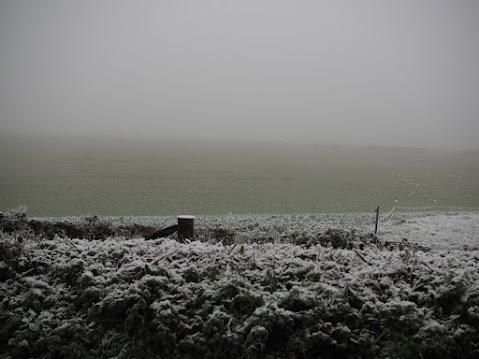
The end of January was marked by cold misty weather


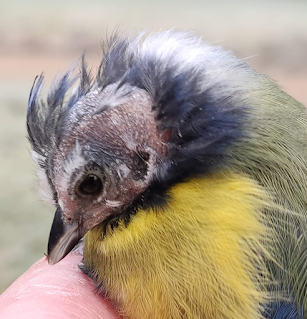
AZJ9041 6 Blue Tit
Ringed in 11/2022, when it had a full head of feathers. While we're given a view of its ears (to the right of the eye, see photo) we hope this bird regains its feathers by the time we see it next. 


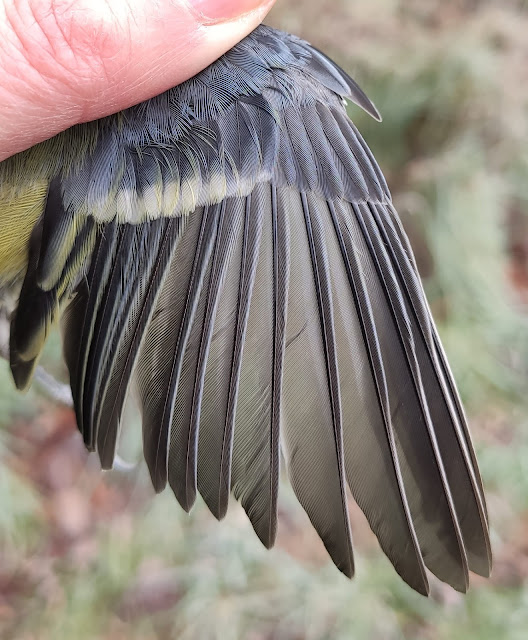
AXA6573 6F Great Tit, 22/1/2023
It takes practice to age this species by comparing GC and PC edges.
Ringed in 2019 as a 3, this adult's PCs are perhaps not as bright as typical adults


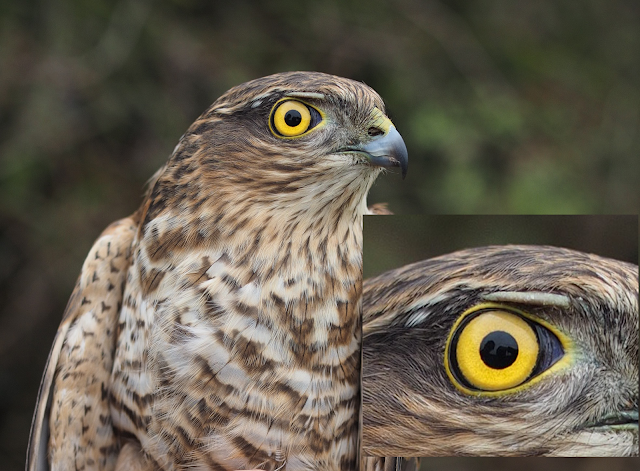
DT54468 5M Sparrowhawk, 28/1/2023
The yellow eye and brown colouring of feathers aid the aging
A supra-orbital ridge can shade its eyes from sunlight 

Among the catches we had 13 retraps. We often get older birds at Woolley Firs having ringed there for over ten years but this month only produced birds we'd ringed in earlier this winter.