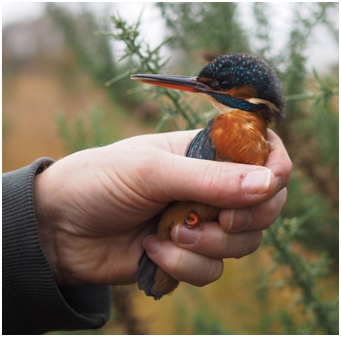
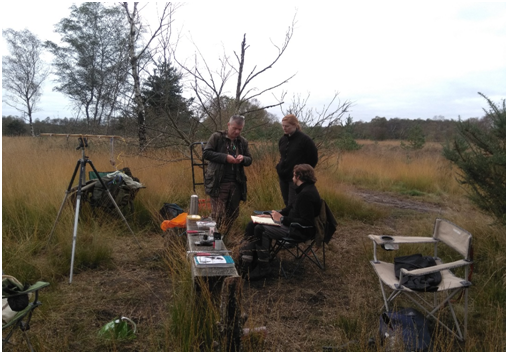
A very quiet month for the group with only two ringing sessions, both at Chobham, giving us the opportunity to catch up with a London member's acoustic findings.
Nocturnal Migration "noc-migging"
September 2021
Noc-migging was carried out on 18 nights, with a total of 26 birds (or groups of birds – you can never be sure of the actual numbers of overflying birds) of 13 species recorded.
Gadwall were recorded on three nights (1st, 14th and 17th). There are presumably migrant birds moving through unlike the Mallard – recorded on 20th (2 records) and 24th – which are probably mostly local birds. The only other waterfowl was a Mute Swan at 01:37 on the 10th and identified by the characteristic noise of the wingbeats.
Two other waterbird species were represented by singles of Coot on 20th and Grey Heron on 3rd.
Two wader species were recorded, Oystercatcher on 11th and a Common Redshank on 9th. Both would have been migrants.
September is usually a good month for migrant passerines, especially up to an hour or so after sunrise. However, this year was poor with just 6 Meadow Pipit and 3 Yellow Wagtail (the September 2020 figures were 85 and 8 respectively). However, fewer nights recording this month, finishing the night’s recordings slightly earlier and the loudness of the local Robins drowning out anything else all may have had a bearing and made any potential comparisons with the previous year difficult.
Two Robin that were recorded in the middle of the night (3rd and 26th) were considered to be migrants overflying the garden, rather than the local birds calling, but impossible to be sure.
The early Redwing, predicted in my August report, did not arrive either and there seem to be very few in the country so far this winter.
They say always save the best until last, and the undoubted highlight of the month was a flock of at least 3 Sandwich Tern at 21:30 pm on 29th.
October 2021
Noc-migging started off as a fairly quiet affair with a possible Dunlin on the 3rd and a Coot on the 5th of note.
The first Redwing of the season (7 calls) were recorded, along with a two Song Thrush and a Blackbird on the night of the 6th. This is nearly a fortnight later than in 2020 when the first redwing were recorded on 26th September.
Then the 12th of October happened! That night, (12th-13th) 777 Redwing calls (involving thousands of birds) were logged over the night with a supporting cast of 61 Song Thrush calls and 4 Blackbird calls. At least one Golden Plover went over as did some nocturnal (probably migrating) Black-headed Gull. This influx was mirrored from other sites in the SE and was the first large arrival of thrushes in the UK this year.
The following night (13th) Redwing numbers were still high with over 220 calls recorded (plus 50 Song Thrush calls) but only 35 Redwing calls on the 14th.
Numbers of Redwing rallied to over 200 calls on both the 15th and 17th before falling again to double figures on the 21st. However, the 21st did bring a new species to the garden noc-mig list with a Green Sandpiper.
Redwings continued to pass overhead with over 250 calls recorded on the 24th before another huge influx on the 28th when 856 calls were recorded mostly before midnight and well over 200 per hour between 20:00 and 22:00, along with 12 Blackbirds and 25 Song Thrush.
The less frequent species recorded this October have rather paled into insignificance after the above, but included 1+ Gadwall on the 14th along with another Golden Plover on that date, an unidentified call which was probably a migrating Jay on the 28th and a Yellow Wagtail on the 13th.
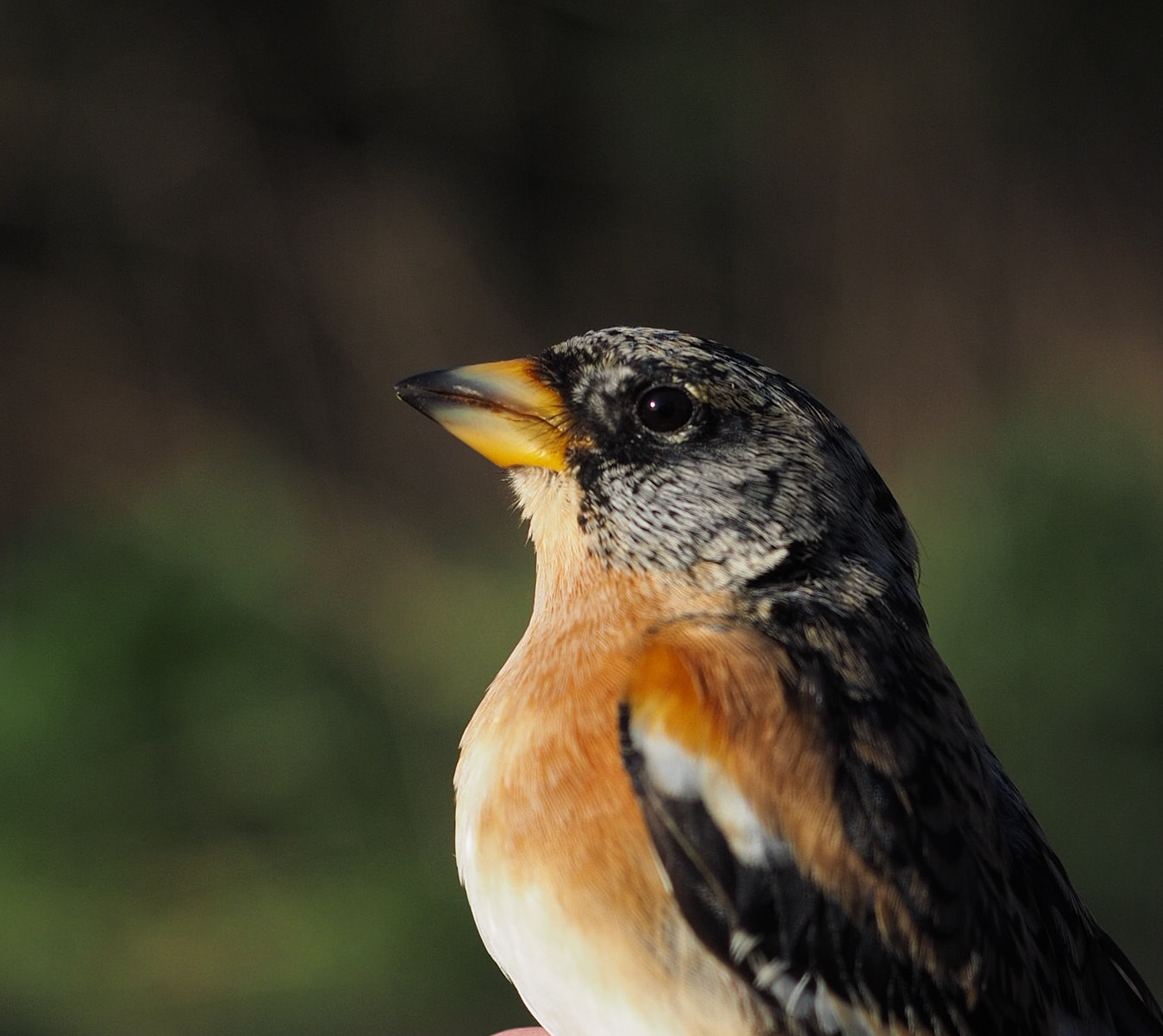
Post-dawn migration has been rather poor in terms of numbers this year, but did include small numbers of Chaffinch, Meadow Pipit, Siskin and alba (Pied/White) and Grey Wagtails during the month, and a Brambling was heard ‘live’ going over on the morning of the 13th.
In total, 14 nights of recording were undertaken and 21 species logged (including post-dawn migrants)
There have been no Fieldfare and it looks like they are late-arriving this year.




 hello
hello